My Purpose
My purpose in this post is to tell you how I did the concept car design that I used in the trainings step by step. If you wish, I can share a simple plane modeling or if there is a parametric design you want, I can share it with you. I would be glad if you specify it in the comments. Photos and Videos are below.

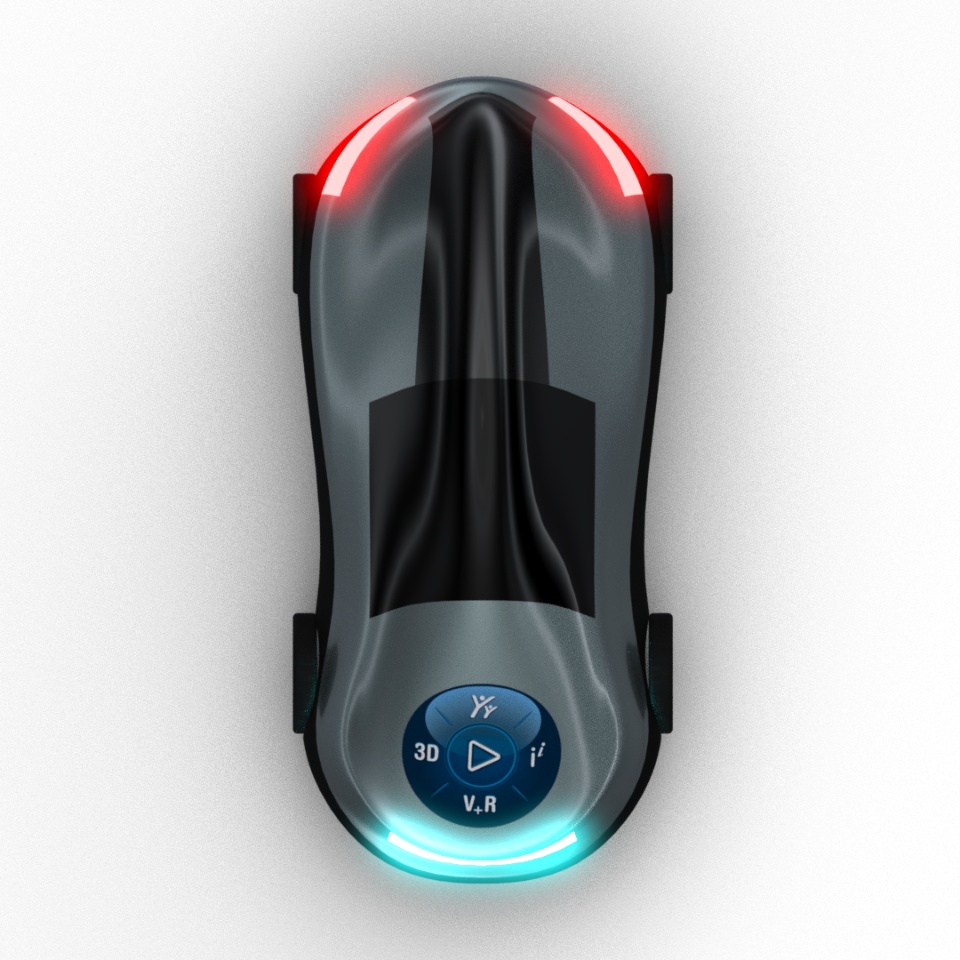
Getting Started with xShape
To start the design, we enter the subdivison tab that we see below. As you can see here, there are many geometries, we choose the box among them, and then we choose the origin we want to start with, you can select a region on the plane if you want.
Start Settings
After selecting our box, we adjust our geometry from the section in the upper left corner. In order to make our origin the center of our geometry, we press the mid plane, and you can use your geometry as angular with the tab under it. Scale section sets the size of our geometry. The boxes on our geometric shape indicate the number of edges as the axis, if we increase this number, we can make more detailed models, but the surface integrity is quickly broken. With the bounding box, we can enlarge it by giving the measurements on the 3 axes, namely the x, y and z axes. If the (scale non uniform) is on, it allows us to measure without changing the ratio of the axes of our model to each other.
Modeling Techniques Symmetrical Reflection
Since it is difficult to design symmetrically in sub-division modeling, the two sides of the part may not be equal.
To achieve this, we must use the symmetric mirroring command.
You can turn off the symmetric projection whenever we want and turn it on in other planes when necessary. When doing sub-d modeling
We start by considering the widest edges of the shape we have in mind or the sketch ahead. As you can see, I can get the shape I want by pulling the edges.
Modeling Techniques Quick Forming
After selecting the edges, you can give the form as you see in our video by selecting the command that the selected edges will take their shape from the small tab that appears. Also, the command with true shape is used the same as the command with spline, which can be used to make a trapezoidal surface flat.
Modeling Techniques Creating Sharp Edges
You may need sharp edges on the part you are modeling.
You can use the sharp edge creation command to achieve this.
Modeling Techniques Scaling
You may need to scale the model based on the size of your design.
If you want to scale, you can do it at the beginning of the design, you can use the scale command later as a size or as a bounding box.
Modeling Techniques Discharge Command
The main thing I want to mention here is that if you delete a surface of the geometric shape you shape, the rest of the model becomes the surface, and you can use the fill surface command to restore it. In addition, after making this model surface, you can continue with the processes you want.
Modeling Techniques Surface Cutting and Extruded Cutting
As you can see in the previous video, we made our model a surface. What we need to pay attention to here is that if we have brought our model to surface form, we can now use only surface commands for our model, as in the example here, I used surface trimming for the wheel housing. In solid form, we use the parametric modeling commands we know. This is the difference between the two as you can see here.
Transparent Imaging
This command is very useful for those who want to add a picture and shape it according to the form in that picture, especially for blue print works.
Edu xShape

